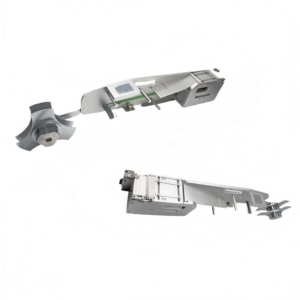
ในโพสต์นี้, I’ll break down everything: Who needs it, what it does, why it matters, and how to use it like a pro. บวก, I’ll share compatibility tips and common mistakes to avoid.
Who Needs a Yamaha Label Feeder?
If you’re runningSMT production linesfor industries like:
Automotive electronics (traceability is law here)
Medical devices (FDA requires full lifecycle tracking)
Industrial control systems (where uptime matters)
…then this is for you.
Still usingmanual labeling after reflow? That’s a bottleneck. Labels get crooked, operators miss parts, and you waste hours reworking boards.
A Yamaha Label Feeder lets yourexisting SMT machine apply labels during placement, so your operators don’t waste time later.
Think of it as afeeder that serves labels instead of components. The SMT machine picks labels like it picks chips, and places them on the PCB with micrometer accuracy.
Core Features
✔Automated Labeling– Skip the manual stickering after reflow. ✔ความแม่นยําสูง– Uses the SMT head for dead-on placement. ✔Plug-and-Play Integration– No extra power. No complicated protocols. Just connect to the vibratory feeder port and set it as aTray Feederin the machine.
Supported Label Sizes:
Parameter
Range
Length/Height
2–80 mm
ความหนา
≥ 0.05 มิลลิเมตร
Backing Width
4–88 mm
Why Do You Need One?
Simple: ประสิทธิภาพ, ความถูกต้อง, Compliance.
✅Efficiency Gains
Yamaha YSM20 can hit30,000 ซีพีเอช. Humans can’t keep up. Automating labeling shaves minutes (or hours) off every batch.
✅Traceability = Compliance
Labels carry serial numbers, barcodes, and lot codes. Automotive and medical standards require this. Skip it, and you risknon-compliance penalties.
✅Fewer Errors = Lower Cost
Manual work means crooked labels, missed boards, and rework. That’s expensive.
✅Space and Money Saved
No extra labeling machine. The SMT line does it all.
How to Choose and Use a Yamaha Label Feeder
ก้าว 1: Check Compatibility
Match your SMT machine model and feeder slot width (usually 8mm/12mm).
ก้าว 2: Pick the Right Labels
Usehigh-temp labels (polyimide) so they survive reflow.
Confirm size fits feeder spec (2–80 mm).
ก้าว 3: Setup in Your SMT Program
Configurepickup height และ placement pressure.
Run peel tests to avoid misfeeds.
ก้าว 4: Maintain It
Clean peel blades and rollers to remove adhesive build-up.
Check for worn feeding gears if labels start jamming.
Common Applications
PCB Identification– Barcodes for MES and traceability.
Component Tagging– Mark large or sensitive components.
Tray & Carrier Labels– Track WIP across stations.
Manual vs Automated Labeling: Quick Comparison
Factor
Manual Labeling
Label Feeder
ความเร็ว
Slow (operator-limited)
High-speed (machine-driven)
ความถูกต้อง
Prone to misalignment
Perfect placement
Labor Cost
สูง
One-time investment
การตรวจสอบย้อนกลับ
Risky
Guaranteed
Pro Tips Before You Buy
Confirm Feeder Protocol: Yamaha uses vibratory feeder interface. No extra software needed—just signal lines likesend label และ label ready.
Plan for Label Rolls: Standard core sizes fit easily, but check diameter limits.
Budget for Training: Even though setup is simple, train operators on peel force adjustments.
บทสรุป
Yamaha Label Feeders aren’t a luxury—they’re the next step if you wantความเร็ว, ความถูกต้อง, and complianceon your SMT line. Instead of wasting time on manual labeling, let your pick-and-place do the heavy lifting.
คําถามที่พบบ่อย
Q1: Can I use this with non-Yamaha machines? ใช่! We support Panasonic, ฟูจิ, ซัมซุง, สากล, ฮิตาชิ, and ASM models.
Q2: What label materials are best? Polyimide or other high-temp labels for reflow durability.
Q3: Do I need extra power? ไม่ใช่. It uses the standard feeder interface for power and control.
Q4: How long does setup take? Usually less than 30 minutes if your machine program is ready.
Q5: Can it handle QR codes? Absolutely. Any label that fits the size spec works.